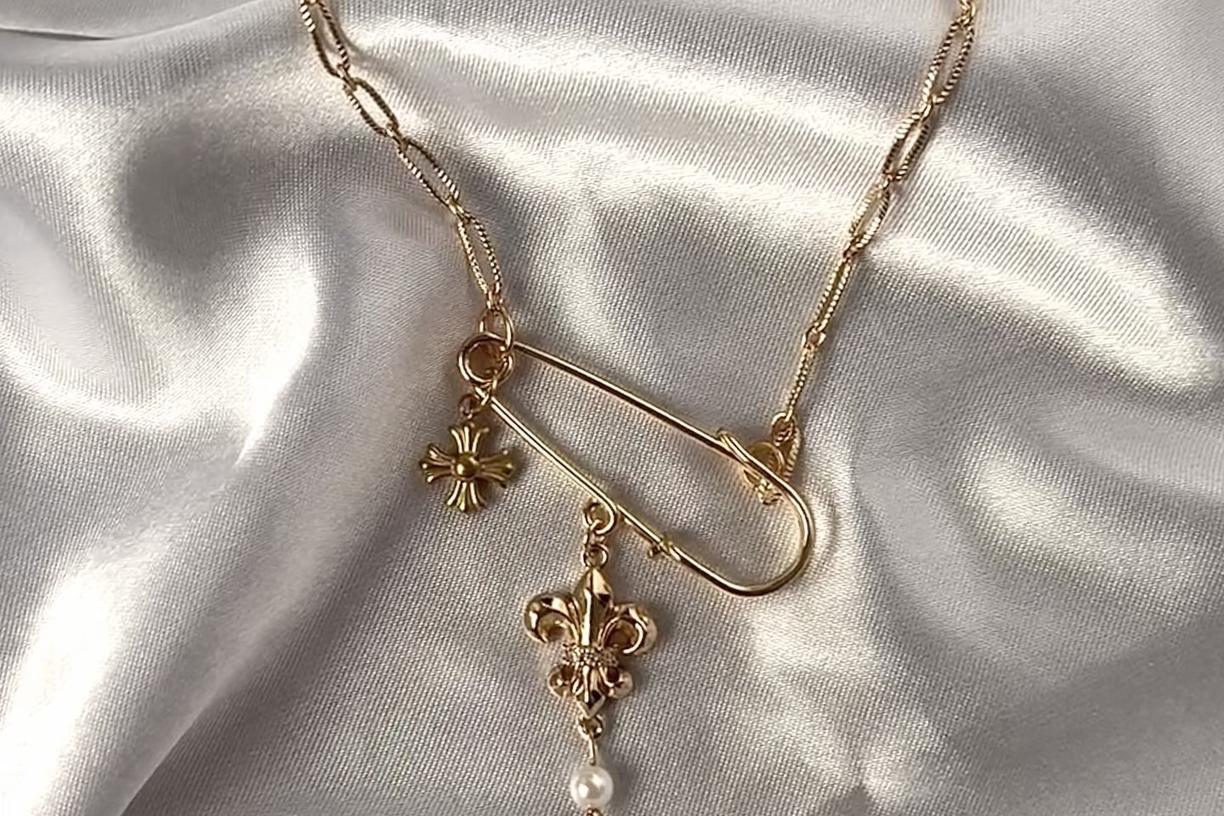
Two rings can look identical in a display case and be entirely different objects. One was cast from a wax model, finished by hand, and built with prongs thick enough to hold for thirty years. The other was cast from the same kind of wax, finished in a barrel of steel shot, and built with prongs that will be half their original thickness in five years. The difference is not visible at a glance, and it is the reason one piece costs $900 and the other costs $340.
I have worked on both kinds. I have also had to tell people that the piece they love is failing because of how it was made, not how they treated it. This article explains the main production methods, what each one does to the metal, and how to tell the difference by looking.
Lost-wax casting
Casting is how most jewelry is made. It is thousands of years old and it is still the dominant method, from a $200 pendant to a $40,000 engagement ring.
The process:
- A model is made. Traditionally carved in wax by hand. Today, often designed in CAD software and printed in a castable resin.
- A wax tree is assembled. The model is attached to a central wax stem, along with many others, forming a tree.
- Investment is poured. The tree is encased in a plaster-like refractory material, which sets around the wax.
- Burnout. The flask is heated to around 1,350°F to 1,500°F. The wax melts and burns out, leaving an empty cavity in the shape of the model.
- Casting. Molten metal is forced into the cavity, either by centrifugal force or by vacuum assist. The metal fills the space left by the wax.
- Quench and cut. The flask is quenched, the investment breaks away, and the cast pieces are cut off the tree.
- Finishing. The sprues are removed, the piece is filed, sanded, polished, and any stones are set.
The method's great advantage is that it can produce almost any shape, including undercuts and complex geometry that no stamping process could achieve. Its great weakness is that metal shrinks as it cools, and shrinkage creates internal defects.
Mass production versus one-off casting
There is a real difference between a production caster running hundreds of the same ring per week and a bench jeweler casting a single piece.
A production caster optimises for throughput. Flasks are large, trees are dense, and the metal is often reused from a common reservoir. Reused metal, called "scrap" or "casting grain," accumulates impurities and oxides over cycles unless it is refined, and heavily reused metal casts with more porosity. Cooling is managed for speed.
A one-off caster — often the same jeweler who will finish the piece — controls the variables more tightly. Metal is fresher, the flask is sized to the piece, and the cooling is slower and more even. The result is a denser casting with fewer internal voids.
This is part of what you pay for when you buy from a small studio rather than a mass producer. It is not magic and it is not a moral difference; it is a set of process choices with measurable consequences.
Why cast pieces have porosity
Porosity is the central weakness of casting and it deserves a proper explanation.
When molten metal fills a mould, three things can go wrong. Gas porosity occurs when gases dissolved in the molten metal come out of solution as it solidifies, leaving spherical voids. Shrinkage porosity occurs because metal contracts as it cools, and if the feed of liquid metal cannot keep up with the contraction, voids form in the last areas to solidify — usually thick sections. Incomplete fill occurs when metal solidifies before reaching thin extremities, leaving the tip of a prong or a fine detail short.
The consequence appears years later. A cast piece has a surface layer that looks solid and a subsurface that contains microscopic voids. As the piece is polished and as it wears, the surface moves inward and eventually reaches the voids. That is when you see pitting: small dark specks or pits on a surface that used to be smooth. Pitting on the inside of a band, on the underside of a setting, or along a prong is usually porosity reaching the surface.
Porosity also explains a specific failure I see often: a solder joint that will not hold. Soldering a porous casting is difficult, because the solder flows into the voids instead of forming a proper fillet at the joint. A jeweler who has tried to solder a porous casting knows the frustration. Sometimes the fix is to cut back to solid metal, which is expensive.
| Defect |
Cause |
How it shows up |
| Gas porosity |
Dissolved gas in molten metal |
Spherical pits, often clustered |
| Shrinkage porosity |
Metal contracting on cooling |
Voids in thick sections, internal |
| Incomplete fill |
Metal froze before filling |
Short prong tips, missing fine detail |
| Oxide inclusions |
Dirty or over-reused metal |
Dark specks, hard spots that fight polishing |
| Misrun detail |
Cold mould or slow pour |
Soft, blurred edges on fine patterns |
Hand fabrication
Hand fabrication is the opposite approach. Instead of casting a shape, the jeweler builds the piece from raw metal — sheet, wire, tubing — using saws, files, torches and hammers.
The tools and operations: sawing sheet to shape with a jeweler's saw; filing to refine an edge; soldering to join components at 1,200°F to 1,500°F depending on the alloy; forging to move metal with a hammer, which work-hardens it; rolling sheet and wire to a precise thickness; raising a vessel form from flat sheet over a stake; stone setting with gravers, punches and beading tools.
The key metallurgical difference is wrought structure. When metal is rolled or drawn, its internal grain structure is refined and aligned, and it becomes harder and stronger — work-hardened. A prong cut from drawn wire is denser and stronger than the same shape cast. This is not a subtle effect. It is why hand-built prongs hold up where cast prongs fail.
Hand fabrication is slow and expensive. A hand-fabricated band might take three hours of bench time; a cast one takes twenty minutes of casting plus finishing. That is the price difference, and it is real.
What hand fabrication gives you: denser metal, tighter tolerances, settings that can be built to the stone rather than to a mould, and repairability. A hand-built piece is usually easier to repair later, because its components are solid and its joints are accessible. A cast piece with an integral porous section is harder.
What it does not automatically give you: a better design. A badly designed hand-fabricated ring is still badly designed. Craft and design are separate axes.
Die striking
Die striking is the industrial method for high-volume, simple shapes. A blank of sheet metal is placed between two hardened steel dies, and a press forces the dies together, stamping the shape.
The advantages are significant. Struck metal is work-hardened by the process itself, so it comes out denser and stronger than cast metal. There is no porosity, because the metal was never molten. The process is fast and cheap at volume. This is how most plain wedding bands, many bangles and a great deal of chain is made.
The limitation is geometry. Stamping works for shapes that can be formed by a die closing in one direction. Complex undercuts, hollow forms and intricate settings cannot be struck. A die also costs money to make — a few hundred to several thousand dollars — so die striking only makes economic sense at volume.
For a plain band, die striking is genuinely the better method, and a struck band will wear better than a cast one of the same weight. If you are buying a plain wedding band, a struck or a hand-fabricated band is a better piece than a cast one, at similar weight.
Electroforming builds a piece by electrodeposition. A mandrel — often made of wax or a base metal — is placed in an electroplating bath, and metal is deposited onto it atom by atom until a shell forms. The mandrel is then removed, leaving a hollow piece.
The result is a piece that looks large and substantial but weighs very little, because it is a thin shell. You see this most in large hoops, big pendants and statement earrings. A 40mm hoop that weighs 2 grams instead of 12 is electroformed.
The honest description: you are buying appearance, not metal. The piece will be delicate, it will dent rather than bend, and it often cannot be repaired — a hole in a thin shell has nothing to solder to. It is also frequently finished with a plating that wears.
Electroforming is not fraud, and a well-made electroformed piece can be perfectly wearable if you understand what it is. What is not acceptable is selling it as though the weight and durability are equivalent to solid construction. If a large gold hoop costs $120, ask what it weighs. If the answer is 1.5 grams, you are buying electroform.
Two different technologies get called "3D printed jewelry," and they produce very different pieces.
Printed patterns for casting. A resin model is printed, then cast by the lost-wax method. The final piece is a casting; the printing only replaced the wax carving. This is now the dominant route for custom work, and it is excellent — it allows precise geometry and easy iteration. The metallurgical result is the same as any casting.
Direct metal laser sintering (DMLS), also called SLM. Here the metal itself is printed. A laser melts successive thin layers of metal powder, building the piece directly. No mould, no wax, no casting.
DMLS has real advantages. It can produce internal structures and geometries impossible to cast. It works with metals that are hard to cast, including titanium, cobalt-chrome and some steels. And it produces a fine, dense grain structure that is often better than cast metal.
It has real limitations too. The surface as-printed is rough and must be finished. Support structures must be removed. Internal stress can build up and require heat treatment. And there is porosity of a different kind — un-melted powder or gas voids can be trapped between layers if the parameters are off.
DMLS is now used for titanium and steel rings, some watch components, and increasingly for gold and platinum pieces where the geometry justifies it. It is a genuinely good method for the right application. It is not inherently superior to casting or fabrication; it is a different tool.
| Method |
Metal structure |
Best for |
Weakness |
| Lost-wax casting |
Cast, porous |
Complex shapes, volume |
Porosity, softer prongs |
| Hand fabrication |
Wrought, dense |
One-offs, repairable pieces |
Cost, slow |
| Die striking |
Wrought, dense |
Plain bands, chain, volume |
Simple shapes only |
| Electroforming |
Deposited shell, hollow |
Large light pieces |
Dents, hard to repair |
| DMLS printing |
Fine, dense, layered |
Titanium, steel, complex geometry |
Rough as-printed, stress |
Cast settings versus hand-built settings
This is where the manufacturing method has the most direct effect on whether your stone stays put.
A cast setting is made as part of the ring, in the same pour. The prongs and the head come out of the mould with the band. They are the same metal, cast at the same time, with the same porosity.
A hand-built setting is fabricated separately — often from drawn wire or tubing — and soldered onto the band. The prongs are wrought metal, denser and work-hardened. A die-struck head is another common option: the head is stamped, which also produces wrought, dense metal, then soldered or assembled onto the band.
The practical difference is prong strength. A cast prong tip is the hardest place to cast, because it is thin and far from the feed of molten metal. That is exactly where incomplete fill and porosity cluster. A cast prong is also softer, so it bends more easily and work-hardens less predictably.
This is why a well-made engagement ring usually has a die-struck or hand-fabricated head soldered to a band, rather than a single cast piece. It costs more, and it is stronger where it matters.
If you are buying a ring and want to know which you are getting, ask: "Is the head cast with the band, or is it a struck or fabricated head set on separately?" A jeweler who knows will answer directly. A salesperson who does not will change the subject.
Finishing, and how much of quality is finishing
A striking proportion of the perceived quality of a piece is finishing rather than construction, and this is under-appreciated.
The steps: filing to remove tool marks and sprues; sanding through progressively finer grits; polishing on a wheel with compounds, often in several stages; tumbling in a barrel with steel shot or a magnetic pin polisher for bulk pieces; and plating — rhodium for white gold, or other finishes.
Two consequences.
First, a cheap piece can be made to look expensive for about a week. A high-polish finish over a porous casting looks beautiful in a case and shows its pits and its soft edges after a month of wear. Finishing buys appearance, and appearance is not durability.
Second, a good piece can look ordinary if it is badly finished, and this happens. I have seen well-fabricated pieces with rough interiors and visible solder lines that sold for less than they were worth, because the finishing was rushed. The construction was there; the last 20% of the work was not.
Rhodium plating deserves a specific note. White gold is plated with rhodium — a hard, bright, white metal in the platinum family — because white gold alloy itself is faintly yellow or grey. The plating is a wear item: 12 to 24 months for a daily-wear ring, then it wears through at the high points and the warmer alloy shows. This is normal, not a defect, and replating costs $30 to $80. A thick, well-applied plating lasts longer than a thin one, and you cannot tell the difference at purchase. This is one of the places where a better manufacturer's piece genuinely lasts longer in a way you cannot see on day one.
Hollow and cast-light construction
Hollow construction removes metal from the inside of a piece to reduce weight and cost while keeping the outside dimensions. It is common in chains, hoops, bangles and some bands.
The economics are obvious: a hollow 4mm rope chain uses a fraction of the gold of a solid one and looks similar. At $2,400 an ounce, that difference is the entire price gap between a $400 chain and a $1,400 one.
The failure mode is specific and worth knowing. Hollow walls run from about 0.2mm to 0.4mm. At that thickness the metal does not wear through gradually — it dents and then crushes. A hollow rope chain that catches on a door handle will crush at one point, and that crush cannot be repaired because there is no metal to work with. A hollow hoop that gets sat on will flatten and stay flattened.
There is a middle category: cast-light or "lightweight" solid pieces, where the metal is solid but thin. These are repairable but wear faster. A cast-light band with a 0.6mm shank will wear through at the back in a few years of daily wear, where a 1.2mm band would last decades.
If you buy hollow, buy it knowing that it is a wear-limited piece and that the honest answer to "can you fix it" will eventually be no. My article on jewelry repair covers when a hollow piece is past saving.
From the bench
Most of the damage we see comes from cleaning, not from wear. But the second-largest cause is storage, and the pieces that fail earliest are almost always the ones made with too little metal in the first place.
How to tell a well-made piece from a cheap one by looking
You can assess construction with your eyes and your hands in about ninety seconds. Here is what to check.
Prong thickness. Look at the prongs holding the main stone. A well-made prong is substantial — roughly 0.8mm to 1.2mm at the tip for a typical solitaire — and tapers to a rounded, well-finished tip. A cheap prong is thin, often under 0.5mm, and looks like a wire. Thin prongs fail. This is the single most predictive check for an engagement ring.
Solder joints. Where a head, a bail or a component is joined, a good jeweler blends the joint so you cannot see it. Run a fingernail over the joint. If you can feel a ridge, or if you can see a colour difference between the solder and the metal, the finishing was rushed. A visible solder line is not a catastrophe, but it tells you about the shop.
Interior finish. More on this below. It is the best single tell.
Hinge quality. On a locket, a bracelet or an earring with a hinge, open and close it. It should move smoothly with no wobble and no grit. A cheap hinge is a rivet in a loose hole; it will loosen further and eventually fail. A good hinge has a proper knuckle and pin.
Clasp construction. Look at how the clasp is made. A solid lobster clasp with a well-formed spring is good. A stamped sheet-metal clasp with a thin tongue is not. Check that the clasp is soldered or welded to the chain properly rather than held by an open jump ring — an open jump ring is a lost bracelet waiting to happen.
Edge quality. Run your finger along the edges of a band or a pendant. A well-made piece has edges that are lightly rounded or chamfered, so they do not cut. A cheap piece has sharp, unfinished edges because the extra filing step was skipped. This is called "breaking the edge" and it is a mark of care.
Weight in the hand. Not a reliable standalone test, because design intent varies, but a piece that feels surprisingly light for its size is probably hollow or cast-light. Ask what it weighs.
Stone setting alignment. Look across the stones in a multi-stone piece. They should be level, evenly spaced and the same height. In a cheap piece they wander. This is visible without a loupe on a well-lit counter.
| Check |
Good sign |
Warning sign |
| Prongs |
Thick, rounded, finished tips |
Thin wire-like prongs |
| Solder joints |
Blended, invisible |
Visible line or colour change |
| Interior |
Smooth and polished |
Rough, ridged, unfinished |
| Hinge |
Smooth, no wobble |
Loose, gritty, riveted |
| Clasp |
Solid, soldered closed |
Stamped, on an open jump ring |
| Edges |
Rounded, comfortable |
Sharp, unfinished |
| Setting alignment |
Level and even |
Stones wander in height |
Why the interior finish is the single best quality tell
If you check one thing, check the inside of the band. It is the best single indicator of manufacturing quality, and here is why.
The inside of a ring is almost never seen. It touches the finger, it is hidden by the hand, and no marketing photograph shows it. It is therefore the place where a manufacturer under pressure will skip work, because skipping it costs nothing in the showroom.
A manufacturer that finishes the interior — files it smooth, sands it, polishes it — is a manufacturer that decided quality mattered everywhere, not just where the customer looks. That decision tends to be consistent. The same shop that finishes the inside of a band usually also uses adequate prong thickness, blends its joints, and breaks its edges.
A manufacturer that leaves the interior rough, ridged from the casting, or marked with visible tool lines has made a different decision. It is not proof that the piece will fail. It is evidence of the standard applied, and it is the cheapest and fastest quality check available to you.
Look at the inside of the band under good light. Run a fingernail along it. A well-made ring is smooth and even. A cheap one has a texture you can feel and see.
What "handmade" legally means, and does not
This is worth being precise about, because the word is doing a lot of work in marketing.
In the United States, the Federal Trade Commission's Jewelry Guides address deceptive claims, and a "handmade" claim must not mislead a reasonable consumer. But there is no single numeric legal definition — no rule that says a piece must be 90% hand-worked to be called handmade. The requirement is that the claim not be deceptive in context.
In practice, a piece marketed as handmade may include:
- A cast component made from a printed resin model
- A die-struck head or a bought-in setting
- Machine-cut stones
- Imported chain, findings, clasps or earring posts
- Assembly and finishing done by hand on those bought-in parts
None of that is necessarily dishonest, and a great deal of genuinely good jewelry is made this way. But "handmade" is not a guarantee that a person fabricated the piece from raw metal, and it does not tell you where the components came from or who assembled them.
The useful questions to ask instead of accepting the word:
- Which parts of this piece were made in your workshop?
- Is the setting cast with the band, or set separately?
- Where were the chain and the clasp made?
- Who does the finishing?
A maker who is proud of their process will answer these easily and specifically. A brand that is trading on the word "handmade" will not.
There is also the question of origin. A piece "designed in" a country and "made in" another is common, and the origin claim on the label is a legal matter in most markets. If provenance matters to you, ask where the piece was manufactured, not where the brand is based.
What the price tiers actually buy
Here is how I would map price to manufacturing reality, for a comparable design. These are broad bands and there are exceptions in both directions.
Under $150. Cast, finished in bulk in a barrel, thin metal, base-metal or plated components, synthetic or very small stones, likely hollow or electroformed if the piece looks large. Nothing wrong with it as costume jewelry; do not expect it to be repairable or to last decades.
$150 to $500. Cast, machine-finished, decent plating, solid construction on smaller pieces, often hollow or cast-light on larger ones. This is where most fashion-fine jewelry sits. The metal is real but there is not much of it.
$500 to $2,000. Cast or struck, hand-finished at least in part, thicker metal, a struck or fabricated head on better rings, natural stones at the smaller end. This is the range where you can get a genuinely durable piece if you choose well and check the prongs.
$2,000 to $10,000. Hand-finished, often hand-fabricated or struck components, fabricated or struck heads, natural stones of decent size, better clasps and hinges, a maker who can tell you how it was built. You are paying for metal, stones, labour and finish, and the proportions are roughly defensible.
Above $10,000. At this level the stone often dominates the price, and the setting work is expected to be hand-finished and often hand-built. The manufacturing quality should be excellent, but note that a high price does not guarantee it. I have seen five-figure rings with mediocre prongs, because the stone was the product and the setting was an afterthought. Check the prongs regardless of the price.
| Tier |
Method |
Metal |
Finish |
Repairable |
| Under $150 |
Cast, electroform, plated |
Thin, base metal |
Bulk tumbled |
Rarely |
| $150–$500 |
Cast |
Thin, some hollow |
Machine |
Sometimes |
| $500–$2,000 |
Cast or struck |
Adequate |
Hand-finished in part |
Yes |
| $2,000–$10,000 |
Fabricated or struck |
Substantial |
Hand-finished |
Yes, well |
| $10,000+ |
Hand-built, hand-set |
Substantial |
Hand-finished |
Yes, well |
For a closer look at how the metal itself is chosen, my piece on gold karats covers what 10K, 14K and 18K actually mean for durability and colour.
Frequently asked questions
Is cast jewelry lower quality than handmade?
Not automatically. A well-cast piece from a good caster is perfectly sound. But cast metal is more porous and softer than wrought metal, so cast prongs and thin cast sections are weaker than the same shapes made from drawn wire or struck sheet. The method matters most where the metal is thin and load-bearing.
How can I tell if jewelry is well made?
Look at the interior finish first. A well-made ring has a finished, smooth interior; a cheap one is left rough because nobody sees it. Then check prong thickness, whether solder joints are blended or visible, and whether a clasp or hinge moves smoothly. Those four checks catch most quality problems.
What does handmade jewelry legally mean?
In the United States, the FTC requires that a handmade claim not be deceptive, but there is no single legal definition with a numeric threshold. In practice, a piece described as handmade may have cast components, imported findings or machine-cut stones. Ask specifically which parts were made by hand and which were bought in.
Why does cast jewelry develop pits over time?
Cast metal contains microscopic gas porosity and shrinkage voids. When the surface is polished back through wear, those voids reach the surface and appear as pits. A porous section is also weaker, which is why a cast prong or a thin cast shank can fail at a point that looks fine from the outside.
Is hollow gold jewelry bad?
Not inherently, but hollow construction fails differently. A hollow rope chain or a hollow hoop has walls as thin as 0.2mm, so it dents and crushes rather than wearing through, and it usually cannot be repaired once it has. It gives you more visual size for less gold, which is the trade you are making.
The bottom line
When you buy, ask three questions and do three checks. Ask what the piece weighs, whether the setting is cast with the band or set separately, and which parts were made in the workshop. Then check the prong thickness with your eyes, run a fingernail along the interior of the band, and feel for a solder line at every joint.
If you are buying a plain band, prefer struck or hand-fabricated over cast — same price, better metal. If you are buying an engagement ring, insist on a struck or fabricated head rather than a single cast piece, and walk away from prongs under about 0.8mm. If you are buying a large hoop or a big chain, ask the weight, and if it is startlingly light, you are buying hollow or electroformed and should price it accordingly.
The method is not the whole story, and a well-made cast piece is a perfectly good piece. But the interior finish and the prong thickness tell you the standard the maker applied, and that standard is what you are actually buying. Check them before you pay, not after the prong fails.